Commentary and insight about the complex legal, medical and social issues surrounding mesothelioma, asbestos and more.

It's good to give green: SEF presents $210k to area charities

September 1, 2010

In the words of Abraham Lincoln, “when I do good, I feel good” and recently I couldn’t feel anything but good about the support the Simmons Employee Foundation provides to area charities. 

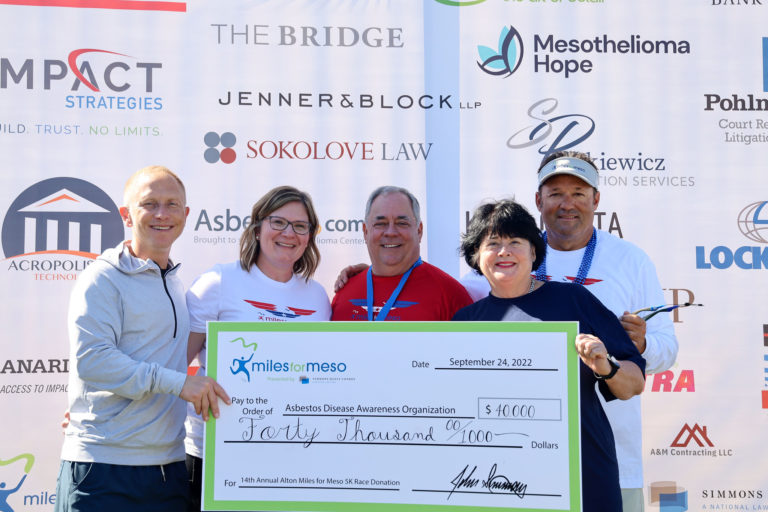
Simmons Employee Foundation president David Bamper and I had the honor of presenting two checks each for $105,000 to the Catholic Children’s Home in Alton and The William M. BeDell Achievement and Resource Center in Wood River. The money was raised during the foundation’s 4th Annual Dinner Auction this past spring.

 Gary Osborne, executive director of ARC, told me his organization plans to use part of the donation to buy a new, 14-passenger van. 

Steven Roach, executive director of Catholic Charities, the umbrella organization of the Catholic Children’s Home, said they expect to put the money toward renovating and updating their 87-year-old building.

The work these two organizations do to provide safe environments for children, diagnosed with developmental disabilities or not, is undeniably important. They’re making our community a better place to live.

Learn more about these two charities and the dinner auction itself by reading my previous post.

Bookmark and Share Comments (0)

Asbestos clinic gets surprise donation from Simmons Mesothelioma Foundation

A nationally recognized medical clinic in the small town of Libby, Montana, recently received a nice reminder that they’re not the only ones who think the work they do for patients with asbestos-related diseases is important.

The Simmons Mesothelioma Foundation recently donated $10,000 to the Center for Asbestos Related Diseases.

The Center for Asbestos Related Diseases is one of a few medical facilities in the nation solely dedicated to treating people with diseases, like mesothelioma, caused by asbestos exposure. Most people would expect to find the treatment options CARD doctors provide in the bigger cities like New York or at a top university like the University of Pennsylvania. But in this case, the clinic went to the people. Literally.

The 10,000 people who live in Libby are 30 percent more likely to develop an asbestos-related disease, like mesothelioma or lung cancer, because a vermiculite mine operated from the 1960s to the early 1990s just outside of town. This form of vermiculite, a shiny rock similar to mica, contained amphibole asbestos. The mining process broke down the asbestos, creating a fine dust, which covered, not only miners, but the entire town. I have read news stories about how it would blanket the town. Miners would come home covered in it, children would play in it, and the wives would clean it, because, back then, no one really understood its dangers. Except the mining company.

W.R. Grace Co., who owned the mine, knowingly poisoned the entire town. Studies estimate that since 1960, 88 miners have died from asbestos-related diseases and that 1 in 40 of residents in Libby and the surrounding area have died or suffered from asbestos-related diseases. Because of this, the town was designated a National Public Health Emergency by the Environmental Protection Agency, the first ever such declaration made by the agency.

Asbestos exposure, even though it might have happened decades ago, is killing people now. No one understands this better than Libby, Montana and the doctors at CARD. The Simmons firm is proud to know that it’s multi-million pledge to the Simmons Mesothelioma Foundation is going to help the people who need it most, such as those treated at CARD.

The Simmons Mesothelioma Foundation didn’t mail a check, as this news article in the town’s newspaper, The Western News, reports. Foundation Chairman John Simmons hand-delivered it while he was on vacation.

Bookmark and Share Comments (0)

BBC's "Dangers in the Dust" asbestos investigation highlights "take home" asbestos exposure

July 21, 2010

At long last, we’re seeing some meaningful, in-depth media coverage surrounding asbestos exposure and the horrible diseases it causes, like mesothelioma.

This is all courtesy of a collaboration between the BBC's International News Service and the International Consortium of Investigative Journalists. "Dangers in the Dust" is being rolled out this week across the BBC's international services, and through ICIJ’s more than 50 partner publications worldwide, including the McClatchy publishing company, owner of over 30 daily newspapers in the U.S. The series examines the dangers of asbestos on an international level and also includes a story on victims of “take home” asbestos exposure called, "Asbestos still killing families, decades later."

When most people think of mesothelioma – if they’ve ever even heard of mesothelioma – they think of a disease that strikes retired workers. They don’t think of people like our 39-year-old client Julie Gundlach. Since her mesothelioma diagnosis, she has been a tireless advocate for mesothelioma and asbestos-related illnesses.

When I was contacted by a reporter with McClatchy’s Illinois newspaper, the Belleville News-Democrat, writing an investigative piece on the dangers of asbestos and the “third wave” of asbestos victims, Julie immediately came to mind.

Julie is a young mother living with peritoneal mesothelioma. She lives in St. Louis with her husband, and she was exposed to asbestos when her father brought it home on his clothing after working as an industrial electrician.

Fact: people like Julie who don’t work around asbestos can be exposed to asbestos by others who do.

It’s called “take home” exposure. Here’s how it works: The asbestos dust gets on an worker’s clothes and skin. When they leave to go home so does the dust, causing them to expose their spouses, children and other immediate family members. In some cases, children have developed mesothelioma or other asbestos-related diseases later on in life because they hugged their parents. In Julie’s case, her childhood playroom doubled as her family’s laundry room where her father’s asbestos-covered clothes were washed.

Helping people like Julie as they fight to be that “one-in-a-million survivor,” as she says in the article, is rewarding. Her story illustrates the important role the legal process plays in ensuring mesothelioma cancer patients receive the funding they deserve to get the best treatments available.

As the BND article accurately states, she has had three surgeries and made over 25 trips to New York for treatment. "If it were not for the legalities, I would have never been able to receive the medical treatment I received," Gundlach said in the article. "I'm still not able to work. Mesothelioma kills innocent people, asbestos kills innocent people, it's not banned, and that is the story, that is the issue."

“Take Home” Asbestos Exposure In the Courtroom

Laws affecting victims of asbestos exposure are not relics from past generations. They continue to evolve in real time. Cases involving “take home” asbestos exposure can be especially combative because the company’s defense lawyers argue “take home” exposure isn’t their client’s problem because family members aren’t employees.

The Appellate Court ruled that companies are required to take steps to prevent the deadly dust from reaching the workers’ home. This is important because some courts have gone the other way and ruled the companies have no duty to the workers’ families; even though the risk of disease in the home was completely foreseeable.

For families like Julie Gundlach’s, this is very important. If certain companies are able to change the laws, sick family members will have no legal recourse. It is our goal to continue to fight for victims and make sure they have access to the courts.

Bookmark and Share Comments (0)

Meso Foundation Symposium reminds me why I am a trial attorney

June 15, 2010

It never gets any easier. Every year I make my way to the Mesothelioma Applied Research Foundation's annual symposium, and every year I'm reminded of why I do what I do.

Each year, for three days, the mesothelioma community gathers in Washington D.C. to exchange medical and scientific updates, network with other allies in the fight to cure meso, and visit The Hill to ask our congressmen and women to allocate funds for mesothelioma research.

Friday evening, they have a tribute ceremony with a huge display of names etched on to a tribute wall. Our firm has a lot of names on that wall. I, personally, have represented a lot of names on that wall. Too many.

So why does this annual pilgrimage relate to being a trial attorney? Because we all play a part in this small but special community, and I know my role well. My job is to fight for the rights of individuals and families who have been wronged through no fault of their own. That's my contribution. And nothing inspires me more to keep fighting on their behalf than to have a good, hard look at that wall.

When you stand in a room with 300 people who have lost a loved one to mesothelioma, it puts things into perspective. Like how academia and the general public has labeled mesothelioma an “orphan” of cancers. When you consider us separately – the doctors, the victims, and the anti-stereotypical lawyers – maybe we are orphans, in a sense. Together, though, nothing could be further from the truth. We are united by this disease, and it feels very present and all too personal.

The hardest part about this tribute ceremony is that wall shouldn’t exist. Mesothelioma, which is caused by asbestos exposure, is a man made epidemic. Asbestos, ironically called the “miracle mineral” was heavily used from the 1930s through the 1970s in the manufacturing, shipping and construction industries. According to the most recent data released by the Centers for Disease Control and Prevention in 2004, approximately 2,700 Americans die annually from mesothelioma, and experts expect that number to continue increasing through 2025.

Companies who made asbestos knew the dangers, but ignored them. Instead they choose to barter their employees and their families’ lives for a bottom line. Because it takes between 10 and 50 years from the time of exposure to develop a meso diagnosis, the full ramifications of asbestos exposure remain hidden until it is too late. Meanwhile, the general public remains unaware that products being used in 2010 – like some automobile parts, certain construction materials and pipe insulation – still contain asbestos.

One fact is certain. The dangers of asbestos exposure were known as long ago as the 1950s, and we still don't have a full ban, and we definitely don't have enough support for research.

The Meso Foundation, which celebrates its 10-year anniversary this year, provides a gathering place for those who have been impacted by mesothelioma. Those who have been diagnosed, families who’ve lost loved ones, lawyers who won’t tolerate injustice, and doctors who are passionate about conquering what medical experts consider the most aggressive cancer of all cancers.

MARF has helped raise awareness about these companies and the dangers of asbestos exposure. In addition, they’ve awarded 67 peer-reviewed grants for over $6.4 million. Those grants have resulted in 32 scientific publications credits, including the world’s most prestigious medical journal, The New England Journal of Medicine.

No one has done more to keep peoples’ names off that wall than MARF, and we at the Simmons firm are proud to be their top supporter. We congratulate them for all the hard work they’ve done over the years to support the meso community. 

Bookmark and Share Comments (0)

Rueters article highlights need for asbestos awareness

June 11, 2010

Earlier this week, while skimming my newsfeeds, I happened upon an example of why you shouldn’t believe everything you read. Over the past year, several companies that knowingly manufactured products with asbestos have declared bankruptcy to avoid their responsibility to compensate the people whom they killed. Reuter’s wire service included a June 7 story about the most recent, called Garlock Sealing Technologies, which manufactures fluid sealing products like gaskets used in the piping industry.

At one point, the article states that asbestos was banned by the U.S. government.

This is not true. Asbestos is not banned. Not in the U.S. Not in Canada. In fact, Canada is the second highest exporter of asbestos and the U.S. is its main customer, according to the U.S. Geological Survey. There has been an effort to ban asbestos with the Ban Asbestos in America Act sponsored by U.S. Sen. Patty Murray, but corporations, special interest groups and their lobbyists have defeated it every year for the last several years.

Research directly links asbestos exposure to deadly diseases like mesothelioma and lung cancer. The government has acknowledged the long-term danger associated with asbestos exposure by imposing training guidelines, like wearing hazmat suits, to ensure its safe removal from buildings. The irony is obvious when you consider that just last year the United States still exported 715 tons of this deadly poison, which kills 10,000 Americans annually, to use in shingles, brake pads and other household appliances.

More than four decades ago, the Environmental Protection Agency declared asbestos a known human carcinogen yet we’re still importing it in 2010?

It’s hard to convince the public a total ban is needed when they already believe it’s outlawed. Even politicians believe a ban is in place. As the Simmons law firm attends the Mesothelioma Applied Research Foundation’s 2010 International Symposium on Malignant Mesothelioma this week, I’m reminded of a story from last year’s event.

While advocating for more mesothelioma research dollars on The Hill, one mesothelioma victim got into an argument with their Congressman over whether asbestos had been banned. The Congressman, like most people, assumed asbestos had long since been banned by the U.S. government. You can imagine the Congressman surprise when a quick internet search proved him wrong.

Articles like the Reuters story perpetuate this misconception. The truth is asbestos is regulated, but it’s not completely banned. This article offers a stark reminder that we must take action now to prevent future asbestos-related deaths, just like we must continue to hold companies responsible for their actions.

Bankruptcy does not make them accountable. It’s a slap on the wrist. These companies are going bankrupt because they knowingly produced a product that poisons people, and they don’t want to take responsibility for their actions. It allows these companies to continue to earn profits while evading their responsibility to compensate the people they killed.

Going bankrupt doesn’t prevent more people from continuing to develop asbestos-related illnesses. It doesn’t give closure to people who have been diagnosed with mesothelioma or asbestos induced lung cancer. Banning asbestos does.

But you shouldn’t believe everything you read. Click here to learn more about what you can do to ban asbestos.

Bookmark and Share Comments (0)

Simmons employee Amy Bourland honored as Woman of Distinction by YWCA

June 1, 2010

A longtime Simmons firm employee, Amy Bourland, was recently selected as one of the YWCA of Alton’s 2010 Distinguished Women. To be selected, a woman must demonstrate exemplary community service and advance the YWCA’s mission of eliminating racism and empowering women.

Knowing Amy, who is our Human Resource Director, she would probably tell you about all the other women who are more deserving of this award. Don’t let her fool you. Since 2004, when she was elected as a board member of the Simmons Employee Foundation, she has worked just as hard to organize golf fundraisers, build a Habitat 4 Humanity house, deliver food to four Madison County food banks, or decorate for the annual SEF dinner auction.

Amy is the type of person everyone – women and men – should aspire to be. She helps before she’s asked. She gives her time and her heart to help those less fortunate than her. When she smiles, you can’t help but smile back.

Amy and eight other area women were honored Thursday during the YWCA’s 20th annual Women of Distinction award luncheon at Lewis & Clark Community College. I was privileged to attend and watch a video interview Amy gave about herself. 

From one Amy to another, congratulations. Because of people like you, the non-profits, charities or organizations that make Madison County a better place receive the long-term support they deserve.

I should mention that the YWCA also inducted four businesses, including the Simmons firm, into its Circle of Distinction for consistent long-time support of the Y and its programs.  As future neighbors to the YWCA, we’re honored to be a part of this circle. In fact, as the Telegraph noted in its article last week, we’re committed to supporting our new neighbors as they begin renovations to their historic building in downtown Alton.

Hats off to Amy Bourland and the YWCA. Your work makes the firm a better place to work and our community a better place to live. Thank you.

Bookmark and Share Comments (0)

4th Annual SEF Dinner Auction Raises over $200k for Local Charities

May 27, 2010

Last Thursday night was a very special night for the Simmons Employee Foundation. We were able to help two local charities whose work improves the quality of life for so many children and families in the Madison County area.

I am writing to you, not as a partner, but as a board member of SEF.  I am humbled and thrilled to announce that the fourth annual SEF dinner auction raised over $200,000 for the Catholic Children's Home and The William M. BeDell Achievement and Resource Center. The money could not be going to a better cause.

These two organizations provide a safe environment where individuals diagnosed with developmental disabilities can learn and grow, and hopefully lead relatively normal lives. The Catholic Children’s Home also provides homes for troubled, abandoned, or neglected youth. Both charities will equally split the proceeds.

Of course, such a huge undertaking could not be done without help from our dedicated and generous employees. To quote John Simmons from the firm’s official annoucement, “It is inspiring that so many of our employees and friends, their families and other local businesses have given so generously.”

Thank you to everyone who made the dinner auction, which was attended by about 500 people, such a spectacular and elegant event.

One of the more special moments of the night was when a video was played by ARC. It’s inserted below. Watch it, and you’ll understand why SEF members have done all they can to support organizations like these.

Bookmark and Share Comments (0)