
Get A Free Legal Consultation
Focus on your health and loved ones while we focus on your mesothelioma claim.
- We fight to maximize your results
- Many clients get results in as few as 90 days
- No out-of-pocket costs for you or your family



Ellen Patton never expected a doctor’s visit for breathing problems to end with a diagnosis of pleural mesothelioma. The disease came as a shock, especially after she learned that years could pass between asbestos exposure and symptoms appearing.
While investigating the possible sources of her asbestos exposure, Ellen worked with our mesothelioma law firm to pursue compensation that helped her continue treatment after insurance refused to cover her care.
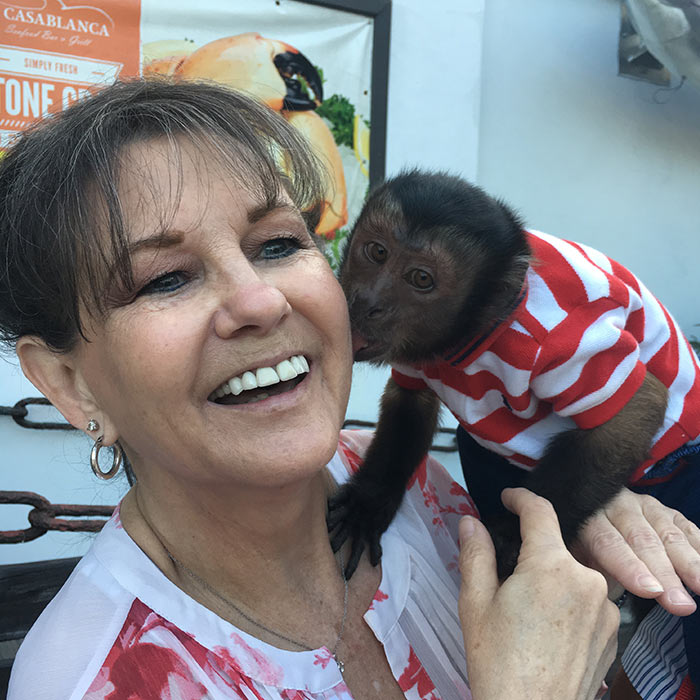
Before mesothelioma, Ellen Patton was rebuilding her life. After spending 15 years living in Atlanta, she had recently moved back to Maryland to be closer to family following the end of her marriage. “I was just starting to live again,” Ellen said. “My marriage wasn’t good, and I was starting to live again.”
Outside of work and family life, Ellen loved traveling, painting, cooking, and making soap. Having lived overseas as a child, travel remained a huge part of who she was.
“The travel is really in my blood,” she said. “I’ve been to Ireland and to England. I lived overseas for 7 years when I was growing up.”
But as Ellen settled into this new chapter, her health began to change. She started experiencing breathing problems alongside stomach issues she had dealt with for years.
Concerned, her primary care doctor urged her to undergo a full medical workup. The diagnosis that followed blindsided her.
“The last thing I was expecting was to have cancer, more or less mesothelioma,” she said. “My first question to the doctor was, ‘How do you spell that?’ I didn’t know anything about mesothelioma.”
At just 41 years old, Ellen was diagnosed with pleural mesothelioma and given a devastating prognosis: roughly 12 to 18 months to live.
After her mesothelioma diagnosis, Ellen began searching desperately for answers. She traveled to mesothelioma specialists across the country, hoping someone would offer a treatment plan that could save her life. Instead, she kept hearing the same thing.
“I basically got the same prognosis from everybody,” Ellen said.
At Johns Hopkins, surgeons attempted a pleural stripping surgery. But once the operation began, doctors discovered the cancer had spread extensively across both lungs and her diaphragm.
“When he opened me up, he said that the cancer was just everywhere,” Ellen recalled. “Both lungs, diaphragm, it was just too much. He couldn’t do anything. So, he closed me back up.”
Another specialist discussed an aggressive surgery that involved removing a lung, but Ellen wasn’t eligible for that procedure either because the disease had already spread too far.
“When I first heard what my prognosis was, I was scared at first,” she said. “I had to get used to that and decide how I wanted to deal with it.”
That moment became a turning point.
“Once I realized that I had a choice to live or to get ready to die,” Ellen said, “I decided to live.”
Rather than structuring her life around dying, she began planning for the possibility that she might still have time. She traveled, spent as much time as possible with family, and refused to put life on hold.
“I acted as though I was going to be here for a while, and that made a big difference for me,” she explained.
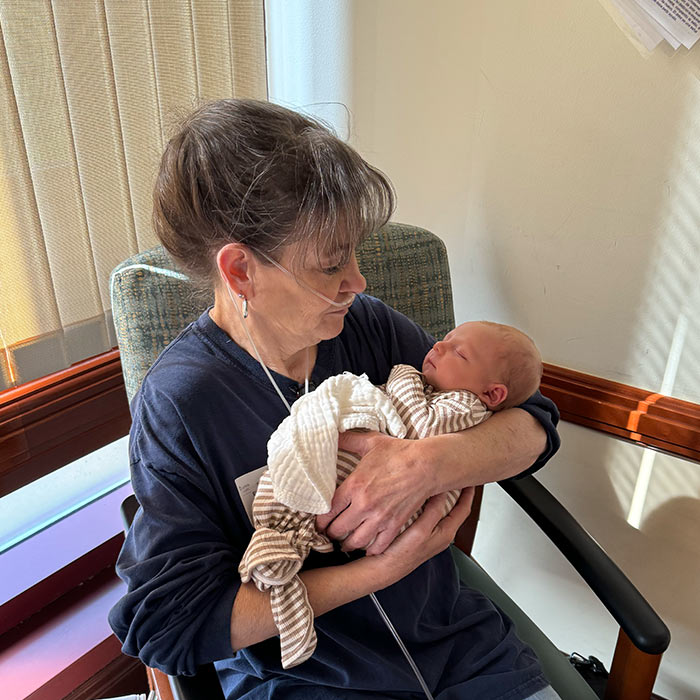

After multiple specialists confirmed there were no standard treatment options left, Ellen began looking beyond traditional medicine. With conventional paths exhausted, she turned to an experimental approach: early immunotherapy offered at a clinic in the Bahamas.
At the time, it was not widely available in the United States and was not covered by insurance.
“I thought, well, they’re not giving me any other options — I’m going to the Bahamas,” Ellen said.
The decision meant committing to a treatment plan that was both physically demanding and financially overwhelming. Twice a year, she traveled internationally for multiweek stays, organizing her life around ongoing care in an unfamiliar setting.
Each visit followed a strict routine. Ellen would undergo blood draws in the morning, then return later in the day for customized injections created from her own samples. Once home, the treatment continued.
“I would have to give myself up to 12 shots a day,” she said. “At first, it was very frightening. After a while, like anything, you get used to it, especially knowing that there’s a good reason for it.”
The experience was isolating at times, but also unexpectedly communal. She met other patients facing similar diagnoses, forming a small support network of people fighting alongside her.
Despite the intensity and uncertainty, Ellen remained committed. The treatment gave her something she had been told she likely wouldn’t have: time.
“It was worth every second and every penny that I had,” she said.
For Ellen, it was about staying in motion, continuing to fight — even when she was told there were no more options left.
For Ellen, pursuing legal action became about far more than compensation. It gave her answers, stability, and a support system during the most uncertain period of her life. After seeing mesothelioma commercials on television, she initially contacted local firms in Maryland, but quickly felt discouraged.
“I had one well-known one that you could tell he was just in it for the money,” she said. “And the other one, I just felt like he was too big, and I was a number.”
Everything changed when another mesothelioma patient she met in the Bahamas told her about Simmons Hanly Conroy. Ellen says the difference was immediate and helped her feel much more comfortable with the process. She knew her case was in good hands.
“I have enjoyed every moment working with Simmons Hanly Conroy,” she said. “The people there are salt of the earth. They never looked at me like their commission.”
From that point on, the legal process became less of a burden and more of a support system. The firm handled the heavy lifting of investigating her exposure and building the case while keeping her informed.
“They made it very easy, and they didn’t have me running around doing anything. They did it all,” she admired.
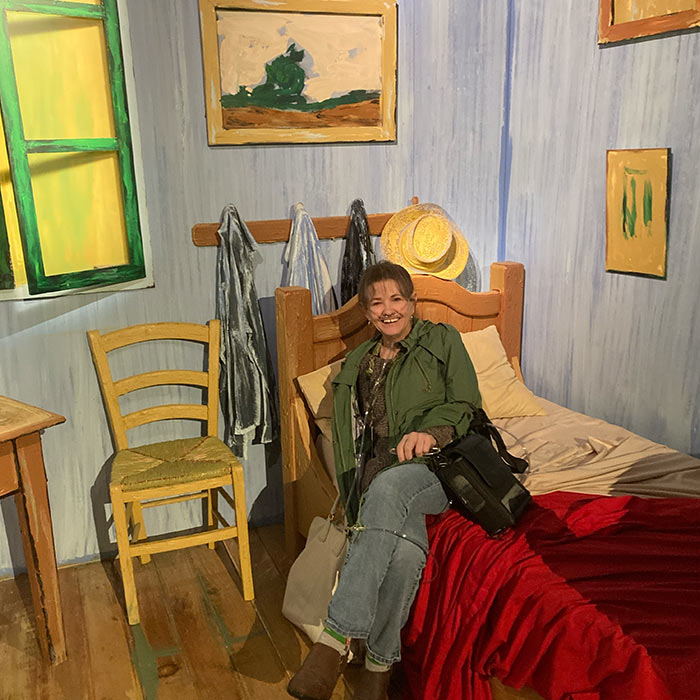
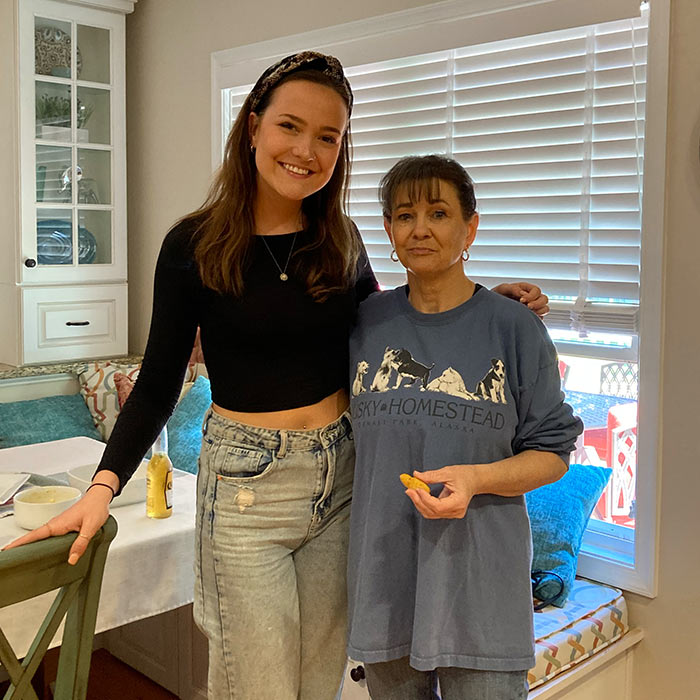
The financial reality of mesothelioma treatment hit Ellen almost immediately. The immunotherapy treatments she pursued in the Bahamas were not covered by insurance, and after separating from her husband, she found herself without coverage at all.
“Insurance covered nothing,” Ellen said. “When my husband and I split, he took me off of his insurance.”
At first, it was her community that carried her through. Friends and family organized a fundraiser that helped her afford the early stages of treatment.
But surviving mesothelioma required far more than a one-time boost. Ellen was traveling to the Bahamas twice a year for weeks at a time to undergo treatment. Her legal settlement ultimately made that possible.
“My first settlement check, even though I was expecting it because I was informed constantly by my attorneys what was going on with the case, it was still a surprise when I got it,” Ellen recalled.
After leaving Georgia during her divorce, Ellen said one of her biggest fears was becoming homeless. “One of the first things I did was go out and buy a house,” she said. “That was my biggest fear.”
The settlement also gave her the freedom to continue pursuing the treatment path she believed was helping her survive. During her time in the Bahamas, she found a place that brought her peace during an otherwise frightening chapter of life.
“Fortunately, again, because of my settlement, I was able to rent an apartment right on the beach,” she said. “I loved waking up every day and seeing that.”
The lawsuit didn’t just provide financial relief. It gave Ellen medical, personal, and emotional options that would have otherwise been out of reach.
As the firm investigated her asbestos exposure, Ellen became deeply involved in trying to understand where her disease came from. She researched products, worked closely with investigators, and even uncovered photographs her father had taken showing asbestos-containing materials in home renovations.
“I wanted to know why,” she said. “I wanted more answers, instead of just saying, ‘I’m going to settle for this and go on.’”
That collaboration gave Ellen something she badly needed at the time: purpose.
“It gave me a purpose. You all were so welcome to my ideas and things that I did,” she explained. “It was such a personal firm.”
With the support of her legal team, Ellen also became an advocate, attending hearings and speaking publicly about mesothelioma and asbestos exposure.
“I wanted to let people put a face to mesothelioma,” she said. “It’s not just a word that a lot of people don’t know how to spell.”
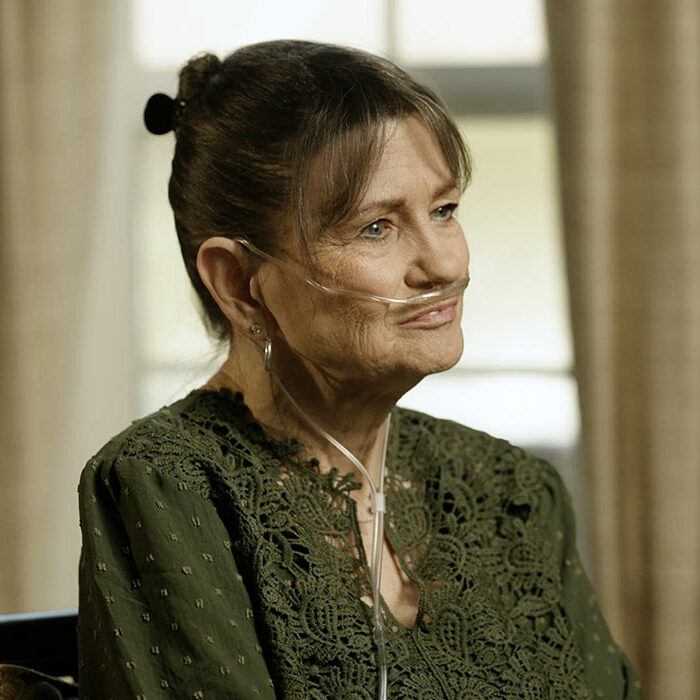
Today, Ellen is a 25-year survivor of a disease that once gave her months, making her one of the longest-living pleural mesothelioma survivors. Her doctors don’t fully understand her case. She keeps meticulous records to show them that her survival is real — and ongoing.
She no longer undergoes active treatment, choosing instead to monitor her condition closely. “If it ain’t broke, don’t fix it,” she said.
Now, her days are centered around family, taking care of her 93-year-old mother and spending time with her siblings, nieces, and nephews. And, unexpectedly, she found love again.
“Right after being diagnosed, I thought, well, that’s gone,” Ellen said. “‘Who’s going to want to be involved with someone that’s got a death notice?’”
Her sisters encouraged her to keep an open mind, joking that she wasn’t going to find somebody just walking through her living room. Then, one day, that’s essentially what happened.
“I had some family come in from Texas, and they had a very good friend and wanted to see him,” Ellen recalled. “So, he came over to see them, and it was just like sparks everywhere.”
“So yes, I did find somebody in my living room,” she added, laughing.
Ellen is candid about what mesothelioma changed. The life she once imagined didn’t unfold the way she expected. But she has reframed that reality.
“You can’t be poor pitiful me all the time,” she explained. “That’s not going to get me much further in life.”
Instead, she focuses on what remains — and what she’s been able to build despite it. The legal decision she made years ago remains central to that outcome. Filing a claim gave her the financial ability to pursue treatment, the stability to rebuild her life, and the platform to advocate for others.
And through it all, one belief has stayed constant:
“Don’t let anyone take your hope,” she said. “You always have hope.”
Twenty-five years after being told she wouldn’t survive, Ellen Patton is still here — living proof that survival is not just about medicine.
It’s about the choices you make, the people you trust, and the fight you’re able to sustain because of them.
 Start My Free Consultation
Secure Submission
 Written by:Simmons Hanly Conroy
The Simmons Hanly Conroy Editorial Team consists of journalists, writers and editors who strive to deliver accurate and useful information to families needing legal help. Our team works alongside the firm's attorneys and partners, as well as with medical professionals and other specialists, to keep all information relevant and helpful.