The history of asbestos litigation dates back to the mid-20th century, when individuals began to file lawsuits after developing mesothelioma and other health issues following exposure to asbestos-containing products.
Mesothelioma lawsuits revealed that many manufacturers knew asbestos could cause illnesses as early as the 1930s but hid the risks. The litigation set legal precedents that continue to help victims today. However, despite regulations and bans, new cases of mesothelioma are diagnosed each year due to exposure that occurred decades ago.
For over 25 years, Simmons Hanly Conroy has been at the forefront of asbestos and mesothelioma litigation. To date, we’ve recovered more than $11 billion for clients across the country — and we may be able to help your family too.
Important Dates in Asbestos Litigation History
Once used in everything from building materials and ships to commercial goods, asbestos was valued for its heat resistance and durability. However, this mineral later became known for the serious health problems it causes.
Corporations covered up the risks of asbestos for decades, but gradually, legal action helped expose the dangerous truth.
Early asbestos litigation efforts centered mainly on noncancerous illnesses like asbestosis. Gradually, more lawsuits were filed related to mesothelioma, lung cancer, and ovarian cancer as the connection between asbestos and these cancers became apparent.
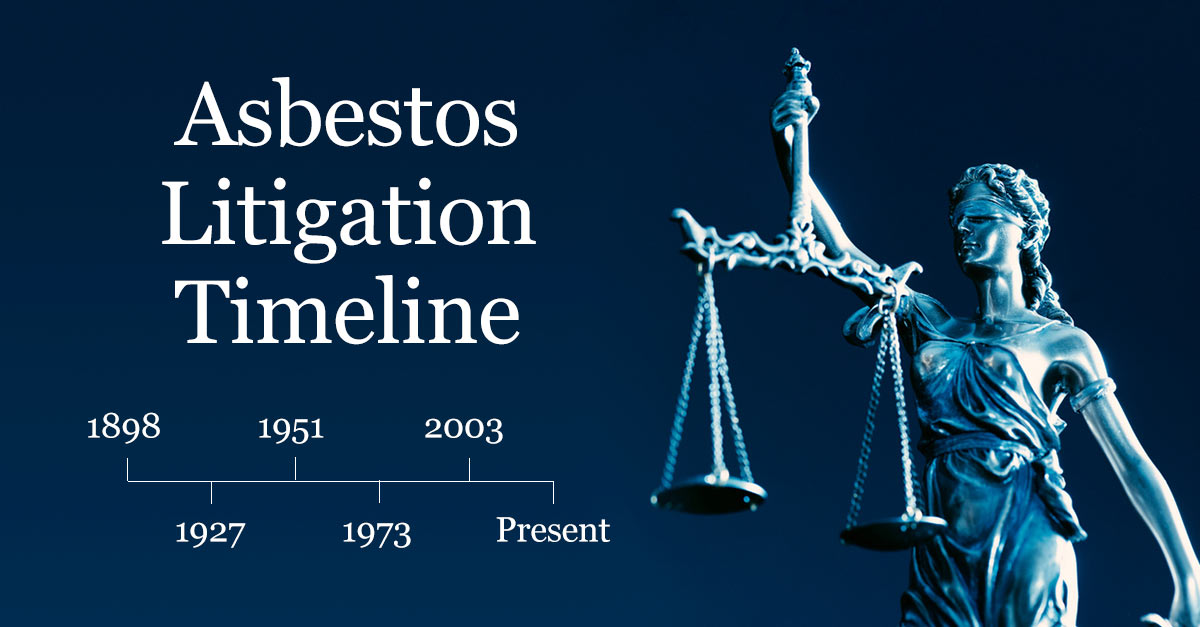
Explore our asbestos litigation timeline below:
1898 – The annual reports of the Chief Inspector of Factories in Britain mention “easily demonstrated” health risks from asbestos.
1899 – After a factory worker dies in London, Doctor H. Montague Murray finds asbestos fibers in the man’s lung tissue during a postmortem exam.
1908 – The United States enacts the Federal Employers’ Liability Act (FELA). FELA was established to protect and provide compensation to railroad workers injured by various circumstances while on the job, including asbestos exposure.
1924 – Nellie Kershaw, a 33-year-old asbestos worker, dies from a noncancerous lung disease known as asbestosis. Hers became the first death attributed to on-the-job asbestos exposure.
1927 – The first known U.S. workers’ compensation claim for an asbestos-related disease is filed.
1929 – Anna Pirskowski files the first asbestos lawsuit in New Jersey against Johns Manville, seeking $50,000 after falling ill. The case is ultimately dismissed, and she receives no compensation.
1930 – The first autopsy on an asbestosis victim is conducted in the United States and later presented by a doctor at the Mayo Clinic.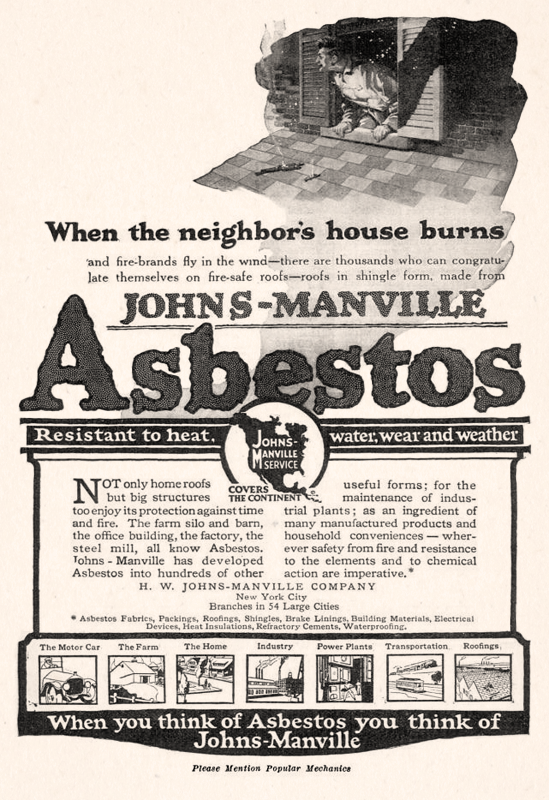
1930 – Johns Manville compiles an internal report detailing worker deaths linked to asbestos exposure, but the findings are not shared with the public.
1933 – Johns Manville settles 11 lawsuits filed by employees suffering from asbestosis on the condition that they agree to never “directly or indirectly participate in the bringing of new actions against the Corporation.”
1935 – Executives from Johns Manville and Raybestos-Manhattan instruct the editor of Asbestos magazine not to publish anything about asbestosis.
1936 – A group of asbestos companies funds medical research on the health effects of asbestos dust, on the condition that the companies maintain control over whether the findings are made public.
1942 – President Franklin Delano Roosevelt issues the Asbestos Conservation order, giving the U.S. military priority access to asbestos for use in U.S. Navy ships during World War II. The U.S. Navy ultimately mandated the use of asbestos in all ships up through the 1970s.
1951 – Asbestos companies remove all references to cancer before research they sponsor can be published.
1957 – Johnson & Johnson (J&J) finds asbestos fibers in samples of talc sourced from their supplier in Italy.
1966 – Tomplait v. Combustion Engineering Inc., et al. is the first asbestos-related lawsuit to go to trial. Insulation worker Claude Tomplait sued Johns Manville and several other companies for $500,000 after being diagnosed with asbestosis. The lawsuit was decided in favor of the defendants.
1970 – The Clean Air Act is passed, allowing the United States Environmental Protection Agency (EPA) to establish an asbestos emissions standard the next year.
1973 – Borel v. Fibreboard Paper Prods. Corp. becomes the first successful asbestos lawsuit. The family of the late Clarence Borel secures mesothelioma compensation through a trial verdict from asbestos companies, paving the way for others to pursue litigation.
1977 – Documents containing details on the efforts of large companies to cover up the health risks of asbestos are discovered and used against manufacturers in court. These become known as the Sumner Simpson papers.
1981 – The EPA requests information from all American companies on any asbestos used in their products.
1982 – Johns Manville, the largest American manufacturer of asbestos products, files for bankruptcy after a major increase in asbestos lawsuits against them.
1988 – Courts order Johns Manville to establish the first asbestos trust fund, allowing victims to seek compensation despite the bankruptcy filing. More asbestos companies follow suit and establish their own trust funds.
1989 – The EPA issues the Asbestos Ban and Phase-Out Rule, restricting the import, production, and distribution of many asbestos-containing products.
1991 – The EPA’s asbestos ban is largely overturned, so companies continue to use this dangerous substance throughout the United States. However, certain products like asbestos-containing flooring, rollboard, and paper remain banned.
1999 – John Simmons founds Simmons Hanly Conroy to help families affected by asbestos-related diseases seek justice. The firm goes on to become one of the nation’s top mesothelioma law firms, recovering billions for clients across the country.
2003 – Simmons Hanly Conroy secures the largest asbestos verdict against a single defendant on record, recovering $250 million for a steel worker with mesothelioma.
2006 – The Owens Corning Fibreboard Asbestos Personal Injury Trust and the Armstrong World Industries Asbestos Personal Injury Settlement Trust are established.
2007 – The U.S. Senate passes the Ban Asbestos in America Act, which would ban the majority of asbestos-containing products. The bill does not become law.
2008 – The Bruce Vento Ban Asbestos and Prevent Mesothelioma Act of 2008 is introduced, aiming to reduce the health risks from asbestos. The bill was named for a politician who died from mesothelioma, but it ultimately fails.
2009 – The ASARCO LLC Asbestos Personal Injury Settlement Trust is established.
2009 – Senate Resolution 57 designates the first week of April as National Asbestos Awareness Week.
2013 – The Furthering Asbestos Claim Transparency (FACT) Act is introduced in the U.S. House of Representatives. Advocates for asbestos victims oppose the bill, saying it would delay or deny justice. It never goes into effect.
2016 – Multiple talcum powder lawsuits filed against J&J are consolidated into a multidistrict litigation (MDL). The lawsuits involve women who used talcum powder that may have been contaminated with asbestos and later developed ovarian cancer.
2017 – Brazil bans the use of asbestos. However, the Brazilian state of Goiás passes a law allowing chrysotile asbestos to still be extracted and exported, contradicting the ban.
2018 – A jury in New Jersey orders J&J and talc supplier Imerys Talc America to pay $117 million to Stephen Lanzo, who developed mesothelioma after decades of talcum powder use. This was the first J&J talcum powder mesothelioma verdict on record.
2018 – A St. Louis Circuit Court jury awards $4.7 billion to 22 women who claimed using J&J’s asbestos-contaminated baby powder caused them to develop ovarian cancer. The payout was later reduced to $2.1 billion.
2018 – Canada bans asbestos, with limited exceptions. For example, older asbestos-containing materials found in buildings, ships, and equipment are allowed to stay in place.
2023 – The Alan Reinstein Ban Asbestos Now (ARBAN) Act of 2023 is reintroduced after failing to pass in earlier years. ARBAN seeks a full, immediate ban on all types of asbestos.
2024 – The EPA announces a ban on chrysotile asbestos, the last type of asbestos permitted in the United States. The rule immediately halts new imports of chrysotile asbestos but provides certain industries up to 12 years to phase out the use of this toxic mineral.
2024 – The Johns Manville Asbestos Personal Injury Trust pays out its one millionth claim to victims and their families. The trust has awarded over $5 billion to date.
2025 – A judge rejects J&J’s $10 billion bankruptcy proposal to settle claims linking their talcum powder products to ovarian cancer. This is the third failed settlement attempt from J&J related to the matter.
2025 – After signaling that it may reconsider the 2024 chrysotile asbestos ban, the EPA reverses course and will continue to uphold it as of July 2025.
2025 – Johnson & Johnson is ordered to pay $1.5 billion and $966 million in two separate mesothelioma verdicts. Both lawsuits alleged J&J’s talc-based baby powder was contaminated with asbestos, causing the victims to develop cancer.
2026 – The number of mesothelioma lawsuits involving asbestos exposure through cosmetic talc continues to grow, with courts awarding numerous multimillion-dollar verdicts to patients and their families across the country.
Simmons Hanly Conroy continues to fight for families impacted by mesothelioma and pursue meaningful results on their behalf. We’re committed to monitoring the latest asbestos litigation trends and helping victims secure justice.
Get Help Pursuing Mesothelioma Litigation
For over 25 years, Simmons Hanly Conroy has played a significant part in shaping the history of mesothelioma litigation. To date, the firm has secured justice for more than 8,900 families impacted by mesothelioma.
Our mesothelioma lawyers make the legal process much easier, filing a lawsuit and pursuing compensation on your behalf if eligible. We’ve held some of the largest asbestos companies in the world responsible for hurting families across the country.
To date, we’ve recovered over $11 billion for those harmed by asbestos.
Call (800) 326-8900 now or fill out our contact form to see if we may be able to help you seek compensation after a mesothelioma diagnosis.