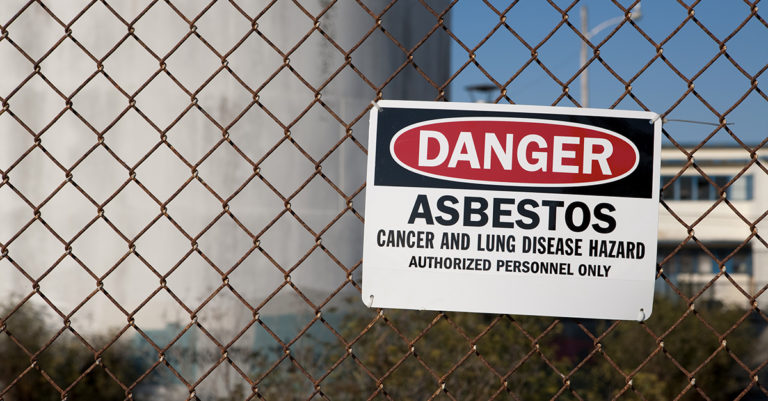
For decades, asbestos was used in thousands of products and workplaces across the United States, exposing millions of workers and their families to a known carcinogen.
Today, families affected by mesothelioma and other asbestos-related diseases continue to file asbestos lawsuits against the companies responsible for their exposure and seek compensation.
But proving where and how that exposure occurred often requires extensive investigation, especially when it happened decades earlier.
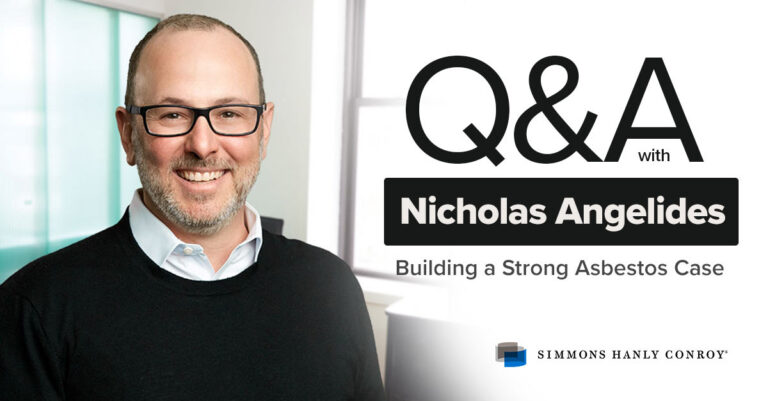
Nicholas Angelides is chair of the Asbestos Department at Simmons Hanly Conroy, where he oversees more than 50 attorneys dedicated exclusively to asbestos and mesothelioma litigation nationwide. Since 2012, he’s led the firm’s legal strategy for all asbestos cases.
With over 20 years of experience representing workers and families affected by asbestos-related diseases, Nick walks us through what it really takes to build a strong asbestos case.
As chair of the Asbestos Department at Simmons Hanly Conroy, what does your role involve?
My role is really about making sure every client gets the same high standard of representation, regardless of where they live or where their case is filed. That means overseeing litigation strategy across the department, coordinating cases in multiple courts at once, and making sure our investigations and evidence-gathering are consistent and thorough.
A big part of the job is mentoring the asbestos attorneys on our team. The quality of our clients’ experience depends entirely on the quality of the lawyers handling their cases, and I take that very seriously.
I’m also deeply involved in the science and medicine side of what we do. Mesothelioma is a complex disease, and to be effective advocates, our attorneys need to understand it — the pathology, the latency period, how exposure history connects to a diagnosis decades later. That knowledge shapes how we build cases and how we cross-examine defense experts.
Beyond individual cases, my role involves staying ahead of how asbestos litigation is evolving — new defendants, shifting court landscapes, changes in how trusts are administered. We represent people who are very sick and don’t have the luxury of time, so we have to be prepared before the case even walks in the door.
Many people diagnosed with mesothelioma were exposed to asbestos decades ago. How do attorneys uncover how that exposure happened?
Mesothelioma can take 20, 30, even 50 years to develop, so we’re often reconstructing work histories from the 1960s and 70s. That’s where our resources really set us apart.
Simmons Hanly Conroy has spent decades building one of the most comprehensive asbestos exposure databases in the country, and we have investigators who track down employment records, company documents, and product records that most people assume no longer exist.
We also spend a lot of time just talking with clients and their families. A worker may not remember a brand name, but they remember the plant, the type of work, and the materials around them. That’s where the investigation starts.
From there, we cross-reference what the client tells us against what we already know — which products were used at which job sites, which manufacturers were supplying which industries during a given decade. Often, we can identify responsible parties that the client never would have thought to name, because they simply didn’t know the brand of the insulation they handled every day.
What I always tell people is that the absence of obvious documentation doesn’t mean the case isn’t there. It means you need attorneys who know where to look and have the resources to keep looking. That persistence is what connects a diagnosis today to an exposure that happened half a century ago.
You’ve described asbestos lawyers as detectives. What kinds of evidence do attorneys look for when building a case?
We’re looking at job sites, product records, historical corporate documents, and prior cases involving similar exposures. In 25-plus years of handling these cases, we’ve built a deep body of knowledge about which products and companies appear again and again.
The evidence is out there. Companies kept records. Suppliers maintained product catalogs. Co-workers gave depositions in earlier asbestos court cases. Our job is to find it all, connect the dots, and obtain the best recovery for the client.
We also rely heavily on records that people don’t always think of as legal evidence — newspapers, trade journals, catalogs, service manuals, invoices, ads. Social Security earnings histories can place a client at a specific employer during a specific window of time.
Union membership records, apprenticeship documentation, and old payroll files can corroborate a work history when memory alone isn’t enough — or when the client has passed and we’re working entirely with the family. These records have a way of surviving even when companies have long since closed or been acquired.
What ties it all together is pattern recognition built over decades of litigation. When a client tells me they worked as a pipefitter in a refinery in the 1970s, we already have a strong picture of what products were likely present, which manufacturers supplied that industry, and what prior testimony exists.
We’re not starting from scratch — we’re adding a new chapter to a story we know very well. That institutional knowledge is one of the most powerful tools we bring to every case.
Your firm handles asbestos cases across the country. How does that national experience help clients?
Every court has different rules, different judges, and different deadlines. Knowing those nuances and understanding how to develop a filing strategy that maximizes compensation and speed comes from years of practice across the country.
A mesothelioma law firm that operates in one state simply doesn’t have that perspective. Handling cases across multiple jurisdictions gives us familiarity with state laws and filing deadlines, allowing us to determine where a case is best filed.
Our national reach also means we have access to more extensive exposure databases. If you worked at a refinery, a shipyard, or a steel mill, there’s a strong chance we’ve already handled cases involving many of the same job sites and products you were exposed to.
That background knowledge helps us recognize recurring exposure patterns, products, and defendants, which can be valuable when investigating a new case.
And it goes beyond the courtroom. Because we’ve litigated against the same defendants and insurance carriers across dozens of jurisdictions, we understand how they operate, how they value cases, and where they’re willing to negotiate versus where they’ll dig in. That intelligence shapes how we approach each case from the very beginning.
What types of workers have you most often represented in asbestos cases?
Asbestos touched virtually every major industry in this country for decades. The workers we represent include pipefitters, plumbers, boilermakers, electricians, insulators, sheet metal workers, carpenters, and shipyard workers.
We also regularly represent auto mechanics, power plant workers, steel mill workers, and military veterans — particularly U.S. Navy veterans, who faced some of the heaviest asbestos exposures of anyone.
What these workers share is that they were doing skilled, honest work, often for their entire careers, without being told that the materials around them could one day kill them.
Secondary exposure is something we see more than people might expect. Spouses and children of tradesmen who carried asbestos fibers home on their clothing and skin. We’ve represented wives who developed mesothelioma from washing their husband’s work clothes for years. They never set foot in a factory or a shipyard, but the disease found them anyway.
Every one of these clients deserves to have their story told — who they were, how they worked, what was taken from them. That’s what drives the work we do as a firm.
What are some of the biggest challenges families face after a mesothelioma diagnosis?
The challenges hit on every level at once. Medical costs accumulate quickly, and if the patient can no longer work, families face a financial crisis on top of an already devastating diagnosis.
Many families are also unaware that compensation may be available. While no amount of money can undo a mesothelioma diagnosis, these recoveries can help cover medical expenses, replace lost income, and provide financial security.
And underneath all of it is the emotional weight of navigating a serious illness while trying to understand your legal options. That’s exactly why we structure our practice the way we do. When a family calls us, we want to take the legal burden completely off their plate, so they can focus on what matters most: their health and their time together.
There’s also the issue of time. Mesothelioma is an aggressive disease, and legal deadlines don’t pause for treatment schedules or hospital stays. Families sometimes wait months before calling an attorney because they’re overwhelmed, and I understand that completely.
But the earlier we get involved, the more options we have. Getting a family connected with the right legal team quickly is one of the most important things anyone can do after a diagnosis.
What I also try to make clear is that pursuing a legal case doesn’t have to be disruptive. We come to our clients and try to do as much as possible at their homes or hospital if needed. We’ve built our process around the reality of what these families are living through because that’s who we’re ultimately here to serve.
What factors can strengthen an asbestos lawsuit or claim?
A detailed work history is the backbone of an asbestos claim. The more specifically we can document where someone worked, what they did, and what materials they were around, the stronger the asbestos case.
A confirmed medical diagnosis, identification of specific asbestos-containing products, and any supporting documentation — union records, employment history, pay stubs — all make a meaningful difference.
Even when clients think they don’t have much documentation, we often find more than they expect. Don’t assume your case isn’t strong before you’ve spoken with us.
You’ve been handling asbestos cases for more than 20 years. How has asbestos litigation evolved during that time?
One of the biggest shifts has been the creation of asbestos bankruptcy trust funds. As lawsuits mounted, many companies that manufactured or sold asbestos products filed for bankruptcy and were required to establish trust funds for current and future victims.
Today, more than 60 asbestos trust funds hold billions of dollars for patients diagnosed with mesothelioma and other asbestos-related diseases. Determining which trusts apply to a client’s exposure history and correctly filing those claims have become major parts of asbestos litigation.
Another important shift is the broader patient population. Early cases often involved workers with direct occupational exposure, but we are now seeing more women diagnosed with mesothelioma after secondary exposure.
At the same time, many companies have been forced to disclose internal documents showing what they knew about the dangers of asbestos and when they knew it. Those documents have fundamentally changed the moral landscape of this litigation.
It’s one thing to argue that a company was negligent — it’s another to show a jury a memo from decades ago where executives weighed the cost of warnings against the cost of lawsuits and chose silence. That evidence has shaped verdicts and, I’d argue, helped hold the entire industry accountable in a way that early asbestos litigation couldn’t.
What hasn’t changed is the disease itself and the toll it takes on families. The science has advanced, treatment options have improved, and patients are living longer after diagnosis than they once did — which is meaningful progress.
But mesothelioma remains devastating, and the people coming to us today deserve the same urgency and commitment as the very first clients I represented. That standard is the one constant across more than two decades of this work.
Get Help from Our Lawyers for Asbestos Cases
At Simmons Hanly Conroy, our lawyers for asbestos cases help workers and families nationwide pursue the compensation they deserve.
Learn why thousands of families have trusted our firm:
- No upfront costs or hourly fees
- Attorneys licensed to help clients in all 50 states
- Over $11 billion total recovered for clients
Call (800) 326-8900 now or fill out our contact form to see if we may be able to help you seek justice. It’s always free to speak with us.