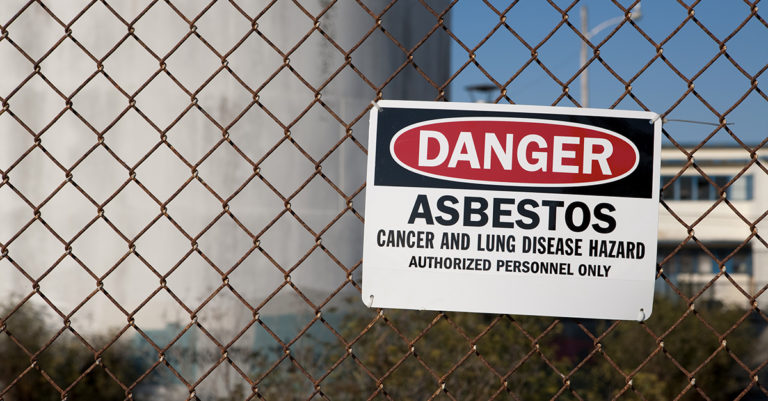
Many families are only now learning that everyday talcum powder products may have exposed them to asbestos, a cancer-causing mineral.
Tens of thousands of talcum powder lawsuits filed against major companies like Johnson & Johnson allege that certain talc-based products were contaminated and that repeated use may have contributed to serious illnesses, including mesothelioma and ovarian cancer.
In this Q&A, Don Blydenburgh, a talc attorney and partner at Simmons Hanly Conroy, shares insight into talc litigation, the cancers at the center of these legal claims, and how an attorney can help families pursue answers and accountability.
What is the talc controversy?
At its core, the talc controversy is about trust and safety. Talc is a naturally occurring mineral, but it’s often found near asbestos, a known carcinogen. When talc is mined, there’s a risk that it can become contaminated with asbestos fibers.
What we’ve seen in litigation is evidence suggesting that some companies were aware of this risk for years, yet continued to use talc in their products without warning consumers.
As a result, people trusted that the talc-based products they used were safe and applied them to themselves and their children only to get sick years or decades later.
What type of cancer does talc cause?
The two main types of cancer we see linked to talc-based products are ovarian cancer and mesothelioma, and the difference often comes down to how the product was used.
In ovarian cancer cases, many women report long-term use of talcum powder in the genital area. The concern is that talc particles may travel through the reproductive system and, over time, contribute to the development of cancer.
For claims involving mesothelioma, the issue is typically inhalation. Talc can become airborne during use, and if it’s contaminated with asbestos, those microscopic fibers can be breathed in and cause lung damage 10 to 50 years later.
I’ve seen how this plays out in real life, with mothers and fathers developing mesothelioma after years of using talcum powder on their children, never realizing they might be exposing their families to something dangerous.
Which talcum powder products are linked to cancer?
The product most people know is Johnson’s® Baby Powder, but it’s far from the only talc-based product that’s come under scrutiny. Over the years, lawsuits have also involved other body powders and cosmetic products, including certain makeup products such as eyeshadow and face powder.
That’s important because many people hear “talc lawsuit” and think only of baby powder. In reality, talc has appeared in a range of products that many people used regularly, often for years.
We’ve seen cases where someone’s exposure didn’t come from just one product, but from a combination of powders or cosmetics used over time.
From a legal standpoint, one of the first things we try to understand is how the person was exposed to asbestos and which products were part of that history. That can help us build a clearer picture of what happened and what companies may be responsible.
How do you know if your cancer was caused by talcum powder?
That’s one of the most common questions we hear. The answer usually comes down to your exposure history, your diagnosis, and the medical evidence.
In these cases, we look closely at whether there was a long history of talcum powder use and whether the diagnosis aligns with that type of exposure, such as mesothelioma or ovarian cancer.
From there, our asbestos attorneys work with medical experts to review records, including pathology reports, and evaluate whether asbestos-contaminated talc may have played a role in the person’s diagnosis.
What I always tell families is that you don’t have to figure this out on your own. Our job is to investigate the details, gather the necessary records, and work with the right experts, so we can give you an honest assessment.
Does Johnson & Johnson still use talc?
It was only in recent years that Johnson & Johnson decided to stop using talc in baby powder and switch to a safer alternative with cornstarch. That shift doesn’t happen in a vacuum — it comes after years of ongoing litigation and scientific scrutiny over the safety of talc.
Sadly, it also comes at the expense of many families who were needlessly affected by talc when safe alternatives were available. For decades, talc-based products were widely sold and marketed as safe for everyday use, including on infants.
The cases we handle today generally involve people who were exposed during those earlier years, long before Johnson & Johnson began phasing talc out of their products.
The key issue isn’t just what companies are doing now but whether people were adequately warned in the past. Families trusted these products were safe and deserve answers about what was known and when.
How many Johnson & Johnson talc claims have been filed?
More than 90,000 talcum powder lawsuits have been filed against Johnson & Johnson, making this the largest mass tort in the country.
Most Johnson & Johnson talc claims have been consolidated into a multidistrict litigation, where cases are grouped together to move the legal process forward more efficiently. The vast majority involve ovarian cancer claims, while a smaller number involve mesothelioma.
Each case represents an individual or a family facing a serious diagnosis. When you see tens of thousands of claims, it tells you this isn’t an isolated issue, but something that has affected many lives in a very real way.
Have there been any J&J talc settlements?
There have been some J&J talc settlements and many large jury verdicts, including one that was nearly $1 billion and another that was a little over $1.5 billion. However, there hasn’t yet been a single global resolution covering all talc cases.
Johnson & Johnson has tried multiple times to settle these claims on a broad scale, including a proposed $10 billion settlement that was ultimately rejected. This means the litigation is still ongoing, and many cases are continuing to move forward in court.
At the same time, the company has resolved a number of cases individually, particularly mesothelioma lawsuits, often through confidential settlements.
And in courtrooms across the country, juries have awarded billions of dollars in verdicts to people who developed cancer after using J&J talc products.
Who can join the talcum powder litigation?
In general, these cases involve people who were diagnosed with ovarian cancer or mesothelioma after long-term use of talcum powder products or from working with or around talc in an industrial setting.
What I always tell people is that every case is a little different. The key factors are usually the type of diagnosis and the history of exposure. Our role is to listen to your story, review your medical records, and help determine whether you qualify to file a claim.
We also speak with families who’ve lost a loved one to one of these cancers. In those situations, certain family members may be able to bring a claim on their behalf.
How long do I have to file a talcum powder claim?
The deadline to file a talcum powder claim is set by what’s called the statute of limitations, and it can be shorter than many people expect. In most states, you typically have about 1 to 3 years to take legal action.
What’s important to know is that the filing period usually starts on the date of diagnosis for personal injury claims and the date of death for wrongful death claims.
This is so critical because you can have a strong case, but if the deadline passes, you may lose your right to pursue compensation. Sometimes there are exceptions, where we can consider different filing options, but those decisions need to be made quickly.
What is the latest talc litigation update?
Talc litigation is still very active, and in many ways, it’s entering a new phase rather than winding down.
Since Johnson & Johnson’s attempts to resolve a large number of cases through bankruptcy settlements have failed, those cases are now moving forward again. That means trials are continuing across the country, and compensation is still being awarded.
What all of this means is simple: These cases are far from over. Courts are continuing to take a hard look at the evidence, juries are still hearing these claims, and families still have the opportunity to come forward and pursue justice.
Let Our Talcum Powder Lawyers Fight for You
At Simmons Hanly Conroy, we have the resources and experience to stand up to large corporations and pursue the justice our clients deserve.
To date, we’ve secured more than $10.6 billion in asbestos compensation for clients in all 50 states.
If you or a loved one has been diagnosed with mesothelioma or ovarian cancer after using talcum powder, we’re here to help you understand your options and take that next step forward.
Contact us now to get started. There are no upfront costs or hourly fees to work with our team.