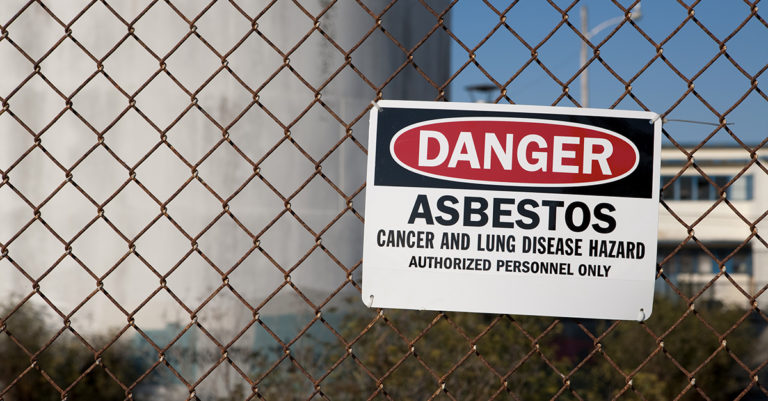
Asbestos is a known health hazard and is highly regulated by both the Occupational Safety and Health Administration (OSHA) and the U.S. Environmental Protection Agency (EPA).
Damaged or worn-down asbestos-containing products may release fibers that can be inhaled or swallowed. Once in the body, asbestos particles can cause damage over decades, leading to mesothelioma, a rare and aggressive form of cancer.
Quick Facts: Asbestos Exposure Jobs
- Over 500,000 employees work with asbestos products, according to OSHA
- Millions of people were exposed in the past from working with or near asbestos products
- Exposure to asbestos kills an estimated 40,000 Americans each year
- Family members may get exposed to asbestos fibers through loved ones who unknowingly carry fibers home from work on their clothes or hair
- It can take 10-50 years for mesothelioma to develop after initial exposure
Through the early 1980s, U.S. workers in many occupations were exposed to high levels of asbestos. Since the material is still not entirely banned in America, some workers remain at risk today.
“Although the use of asbestos and asbestos products has dramatically decreased in recent years, they are still found in many residential and commercial settings and continue to pose a health risk to workers and others.”
– The National Institute for Occupational Safety and Health (NIOSH)
Certain jobs carry a higher risk of asbestos exposure, especially those involving older buildings, industrial equipment, or heat-resistant materials. Workers in asbestos at-risk occupations may have been exposed without warning.
Learn more about 12 high-risk jobs for asbestos exposure in 2026 below.
1. Military Service Members & Veterans
About 33% of mesothelioma patients are veterans of the U.S. Armed Forces due to the high amount of asbestos used throughout the military. While those in the U.S. Navy were particularly at risk, any veteran could have been exposed.
Veterans may have been exposed while serving in the:
From the 1930s to the late 1970s, asbestos was used extensively in vehicles, equipment, and buildings in every branch. Even today, asbestos can be found in older military installations and on naval ships across the country, putting current military service members at risk.
Not only were many military men and women exposed to asbestos during their service, veterans transitioning into civilian life would often go on to hold similar occupations in the private sector, which also further exposed them to the toxic material.
2. Firefighters
According to the International Association of Fire Fighters (IAFF), 80% of those added to the Fallen Fire Fighter Memorial in 2025 died from occupational cancer.
Fighting fires puts people at risk of exposure to hundreds of chemicals and carcinogens, including asbestos. Asbestos is still lurking in an estimated 25 million older homes built before the dangers of this mineral were known to the public.
Unfortunately, many firefighters may not know beforehand that the emergency they’re responding to could involve hazardous materials.
“Since asbestos is a substance that’s not an issue unless disturbed in some way, there’s no way for them to know before they arrive if it’s in a building’s tile glue, ceiling tiles, etc.”
– Spokesperson for Austin, Texas Fire Department
With no advanced warning, firefighters can’t take the required measures to protect themselves.
Because of this, firefighters are twice as likely to develop mesothelioma as the general public, with military firefighters, fire control men, and aviation fire control technicians at an even greater risk.
3. Construction Workers
Asbestos has been used in building materials for decades. It was considered the perfect construction material because it made products lighter, stronger, and fireproof.
As a result, many commercial, industrial, and residential buildings constructed between 1920 and the 1980s still contain asbestos, putting the construction workers who work on older buildings at risk of exposure.
Construction materials that may contain asbestos include:
- Asbestos cement sheets and pipes
- Ceiling tiles
- Floor tiles
- Friction materials
- Insulation
- Paints and sealants
- Patching and taping compounds
- Pipe insulation
- Roofing materials
- Transite wallboard and pipe
- Vinyl floor tiles
- Wall and ceiling plaster
There are many possible ways construction workers might be exposed to asbestos on the job, which makes proper ventilation and safety gear important. Sadly, workers are not always given protective equipment or warned about asbestos hazards.
Repair, renovation, and maintenance can disturb asbestos-containing products. Cutting holes or drilling into roofing, pipes, and siding can cause asbestos fibers to be released into the air and inhaled by workers.
Worse, it’s not always possible to know when asbestos is present. Safety protocol is to assume any building material installed through the early 1980s contains asbestos, but the protocol is not always followed.
4. Mechanics
Brake mechanics and auto mechanics perform hands-on work with worn automobile parts, which can expose them to asbestos. Working with clutch facings, brake shoes, linings, and other friction materials that were often made with asbestos before the early 1980s can also put mechanics at risk.
“We knew asbestos was in things, but we didn’t know it was dangerous or that it could cause cancer or kill you,” said Dennis, who developed peritoneal mesothelioma after years of working as an auto mechanic.
Many auto technicians and mechanics have endured years of asbestos exposure at repair shops, garages, dealerships, and service stations. To make matters worse, some garages may be confined spaces with minimal ventilation, allowing asbestos fibers to linger.
Some automobile parts manufacturers continue to defend asbestos as being safe if it’s properly contained. This simply is not the case, as no amount of asbestos exposure is considered safe.
5. Insulators
Insulators install, maintain, and replace thermal insulation materials in residential, commercial, and industrial work sites. Insulators working in buildings or around machinery manufactured before the 1980s may be at risk of asbestos exposure.
Insulators at risk of asbestos exposure include those who work at:
- Apartment complexes
- Chemical plants
- Factories
- Paper mills
- Power stations
- Refineries
- Schools
- Shipyards
Insulators often cut insulation with hand saws and knives, which can disturb asbestos and increase the risk of exposure. Defective respiratory equipment when working to seal or remove asbestos-based insulation may also increase this risk.
In one case, our asbestos attorneys secured $10 million for a Missouri insulator who developed mesothelioma due to occupational asbestos exposure.
6. Plumbers
Plumbers who help renovate older homes or businesses are at an especially high risk for asbestos exposure. However, even plumbers performing routine work could be at risk if they handle old asbestos-containing components like cement pipes.
Some plumbing materials that contained asbestos include:
- Hot water pipes
- Joint compounds, adhesives, and sealants
- Lagging in wall cavities
- Outdoor toilets and laundries
- Stormwater and sewage piping
- Swimming pools
- Tank insulation
- Tiles
- Toilet seats and cisterns
- Water tanks
Additionally, plumbers regularly work around other tradespeople like insulators, drywallers, and carpenters who routinely use asbestos-containing materials, which puts them at risk of exposure.
7. Shipyard Workers
Shipyard workers faced a high risk of asbestos exposure, especially while building, repairing, or overhauling naval and commercial vessels.
Asbestos was widely used in shipyards because it resisted heat, fire, and corrosion. Even workers performing routine labor could be exposed when disturbing asbestos-containing materials.
Some of the shipyard materials that contained asbestos include:
- Boiler insulation
- Brake linings
- Electrical wiring
- Engine room components
- Fireproofing materials
- Gaskets and packing
- Pipe insulation
- Pumps and valves
- Soundproofing panels
- Turbines and generators
Shipyard work often took place in confined, poorly ventilated areas such as engine rooms and boiler spaces, where asbestos fibers could linger in the air long after materials were cut, removed, or repaired.
8. Boilermakers
Boilermakers erect and repair boilers in office buildings, industrial plants, apartment complexes, schools, warehouses, and other structures that still use steam as a heat or power source. Because of its fire-resistant properties, asbestos was used as the primary heat-insulation material in industrial and residential boilers.
Though the government began to regulate the use of asbestos in the 1970s, thousands of boilers around the country remain contaminated with asbestos. The extensive use of asbestos, especially in older boiler systems, puts boilermakers at high risk for asbestos exposure even in the 21st century.
In one case, our asbestos lawyers secured $4.3 million for a Florida boilermaker and U.S. Army veteran who was exposed to asbestos while installing and servicing boilers.
9. Electricians
Asbestos was used in electrical equipment due to its fire and heat-resistant properties. Like many other trade workers, electricians may be at risk of coming into contact with asbestos at some point during their careers.
In some cases, electricians encounter asbestos-containing products like insulation or piping when crawling through attics or basements on the job.
Some of the asbestos-containing products encountered by electricians include:
- Ceiling tiles
- Cement siding
- Circuit breakers
- Decorative plaster
- Drywall
- Electrical ducts
- Electric wiring insulation
- Joint compound
- Spackling material
- Switchgear
- Textured paints
Working around older electrical equipment could disturb asbestos and lead to accidental exposure to fibers. Electrical contractors may also be at risk while performing low-hazard work on asbestos that gets disturbed.
“When my dad was working as an electrician, things would be floating in the air, and it was the asbestos from wrapped pipes around the plumbing.”
– Linda, Daughter of Mesothelioma Warrior Albert
10. Pipefitters & Welders
Asbestos was widely used to insulate pipes and protect equipment from extreme heat, putting pipefitters and welders at a high risk of exposure.
Like many skilled trade workers, they could come in contact with asbestos during installation, repair, or maintenance work, especially in older buildings, industrial facilities, and shipyards.
Working on or around aging piping systems could lead to exposure. Pipefitters and welders may also face risk during maintenance tasks when asbestos fibers are released into enclosed or poorly ventilated work areas.
11. Steel Workers
Asbestos was commonly used in steel mills because of its ability to withstand extreme heat, causing many steel mill workers to suffer asbestos exposure throughout their careers.
Workers could encounter asbestos while operating furnaces, maintaining equipment, or performing repairs in older steel plants.
Some asbestos-containing products encountered by steel workers include:
- Asbestos rope
- Boilers
- Block insulation
- Furnaces
- Gaskets and packing
- Insulating boards
- Pipe coverings
- Refractory bricks
- Protective heat shields
- Spray-on fireproofing
In addition to workplace materials, steel workers often used protective equipment like gloves, aprons, and jackets that was lined with asbestos to withstand the high temperatures. Over time, wear and tear on this gear could release asbestos fibers, creating another source of exposure.
Our asbestos exposure lawyers secured the largest asbestos verdict against a single defendant ever — $250 million for a retired steel worker with pleural mesothelioma from Indiana.
12. Teachers & School Staff
While it may come as a surprise to many, teachers are at risk of asbestos exposure. According to the EPA, about 20% of public buildings in the U.S. contain asbestos. This amounts to over 730,000 structures, which include many public schools.
By EPA estimates, about 138,000 U.S. schools contain asbestos-containing materials. Within schools, asbestos is often found in plaster, insulation on boilers and pipes, and floor and ceiling tiles.
With the amount of time teachers spend within school walls, they could unknowingly be at risk of asbestos exposure.
In one case, our asbestos law firm secured $4 million for the family of a California teacher who passed away from mesothelioma.
The Risk of Take-Home Asbestos Exposure for Family
You don’t have to work with asbestos-containing products to be exposed to this toxic material. Anyone could be at risk of asbestos exposure simply by living with someone who works with or near contaminated products.
Asbestos fibers can travel home on a worker’s clothing or tools, putting their family members or roommates at increased risk of exposure. This is known as secondhand or take-home exposure.
To limit the risk of take-home exposure, federal law requires some workers to:
- Wear protective gear
- Leave contaminated gear, clothes, and tools at work
- Shower before leaving work if possible
- Wash dirty uniforms separate from everyday clothes
Family members could inhale asbestos fibers while hugging a loved one after work, washing dusty work clothes, or cleaning areas where contaminated clothing and equipment were stored.
“My father was a tradesman. He was a commercial electrician and brought home fibers on his clothes. My father would come home from work, and I’d run up and hug him. He was covered in dust from a worksite. We didn’t know that included asbestos dust.”
– Julie, Peritoneal Mesothelioma Survivor
Can You Sue for Being Exposed to Asbestos?
Families affected by mesothelioma may be eligible to sue the companies that made or sold the asbestos products they were exposed to. This can recover compensation for medical bills, travel costs for treatment, lost wages, everyday living expenses, and more.
Our experienced asbestos lawyers can investigate your work history, the products you used, and other potential exposure sources to determine who may be responsible and which types of claims you may qualify for.
Even if the exposure happened decades ago or you’re unsure exactly how it occurred, you may still be able to take legal action and pursue compensation to ease your financial burdens.
“Our attorney spent a couple of hours with us and just asked John many questions about where he worked, when, timelines, asked for a copy of the diagnosis, and those kinds of things. He said there was definitely a case.
– Dee, Wife of Pleural Mesothelioma Survivor John
Our Occupational Asbestos Exposure Lawyers Are Here for You
While these occupations are known to put workers at risk of asbestos exposure, they are not the only ones. Workers from various industries and trades were exposed to asbestos — and the health risks were hidden from them until it was too late.
Some retirees and veterans may be caught off guard by their diagnosis, thinking their occupational risks are long behind them. Because mesothelioma can take decades to develop after asbestos exposure on the job, workers and their family members may still be at risk today.
For over 25 years, Simmons Hanly Conroy has seen firsthand the devastation this cancer has caused workers in various industries and trades. Our mesothelioma lawyers are dedicated to fighting for justice on behalf of victims and their families across the country.
We’ve secured over $10.3 billion in mesothelioma compensation to help our clients pay for medical expenses, lost wages and more.
If you or a loved one has been diagnosed with mesothelioma, call (800) 326-8900 or get a free legal consultation now to see if we may be able to help.